Categories
Contemporary Novels

HEFT by Liz Moore

When I first started putting up these short reviews, I didn’t think I’d write about multiple books by a single author. As in so many other ways, Liz Moore has made me think again.

HEFT is her second novel, from 2012, and it’s radically different from her gritty, suspense-driven LONG BRIGHT RIVER (2020). HEFT alternates between two first-person viewpoint characters: Arthur Opp, a morbidly obese former academic who hasn’t left his house in years, and Kel Keller, a high-school athlete with prospects of a major league career. What these two people have in common is Charlene Turner, who is Arthur’s former student and Kel’s mother. Over the course of the novel, secrets are revealed (but not all of them) and lives are changed. I’ll let you discover the details for yourself.

From reading the flap, I didn’t think these were characters I would be interested in. In fact I came to care deeply for them. The rare and wondrous thing that Moore has crafted here is a novel in which there are no villains and none of the characters is mocked or condescended to. Everyone is fighting to make sense of the world as best they can, to be a good person, to live with their particular pain. Arthur’s descriptions of the great solace he gets from eating are sensuous and convincing. Kel’s struggle to accept the kindness of his friends and their families is likewise profound and real. The supporting characters, down to the lowliest spear-carrier, are vivid and memorable. No gunfights or car chases are needed to make this book utterly compelling reading.

In HEFT, Moore repeatedly confounded my expectations in delightful ways, and proved that LONG BRIGHT RIVER was no fluke. With these two novels, she has become one of my favorite writers, and I’ll be gobbling up her other books with an appetite worthy of Arthur Opp.

Categories
Contemporary Novels

LONG BRIGHT RIVER by Liz Moore

I could go on at some length about all the things in this book that should have annoyed me. The present tense. The lack of quotation marks (why, oh why do writers do that?). The half-page chapters needlessly breaking up continuous action. The space breaks after every sentence during the climax. The secrets that the not-entirely reliable first-person narrator holds back until nearly the end.

But I won’t. The truth is that Moore’s protagonist–Michaela, aka Mickey, Fitzpatrick–uniformed beat cop, single mom, sister to the homeless heroin addict Kacey–hooked me from the start. It’s not just the gorgeous prose, the complex characters, the vivid setting (Philadelphia’s vice-ridden Kensington neighborhood), or the masterfully constructed storyline (which had me gobbling red herrings and fighting for balance as the rug was pulled out from under me time and again). What makes this book so mesmerizing is its relentless compassion.

There’s a somewhat conventional suspense armature that holds everything together, the hunt for a serial killer of prostitutes. Moore strips this chestnut of all sensationalism and focuses instead on realistic police work, the grim monotony of the victims’ lives, and hints that things may not be what they seem. It’s personal for Mickey because her sister could be the next victim, yet this plot thread recedes as Moore, in long sections labeled “Then,” reveals more and more of the Fitzpatrick family history, the addictions, the bonds, the betrayals, the poverty and hardship. Privilege, in this novel, is something only seen at a distance.

As the story unwinds, the characters surprise repeatedly–with cynicism and cruelty, but also with unexpected kindness and wrenching insight.

LONG BRIGHT RIVER is literary suspense with the emphasis on “literary,” making me think of a cross between Donna Tartt and Tana French, dealing with the most serious issues of morality, gender, and psychology, while never losing the momentum of its juggernaut plot.

Categories
Music Nonfiction

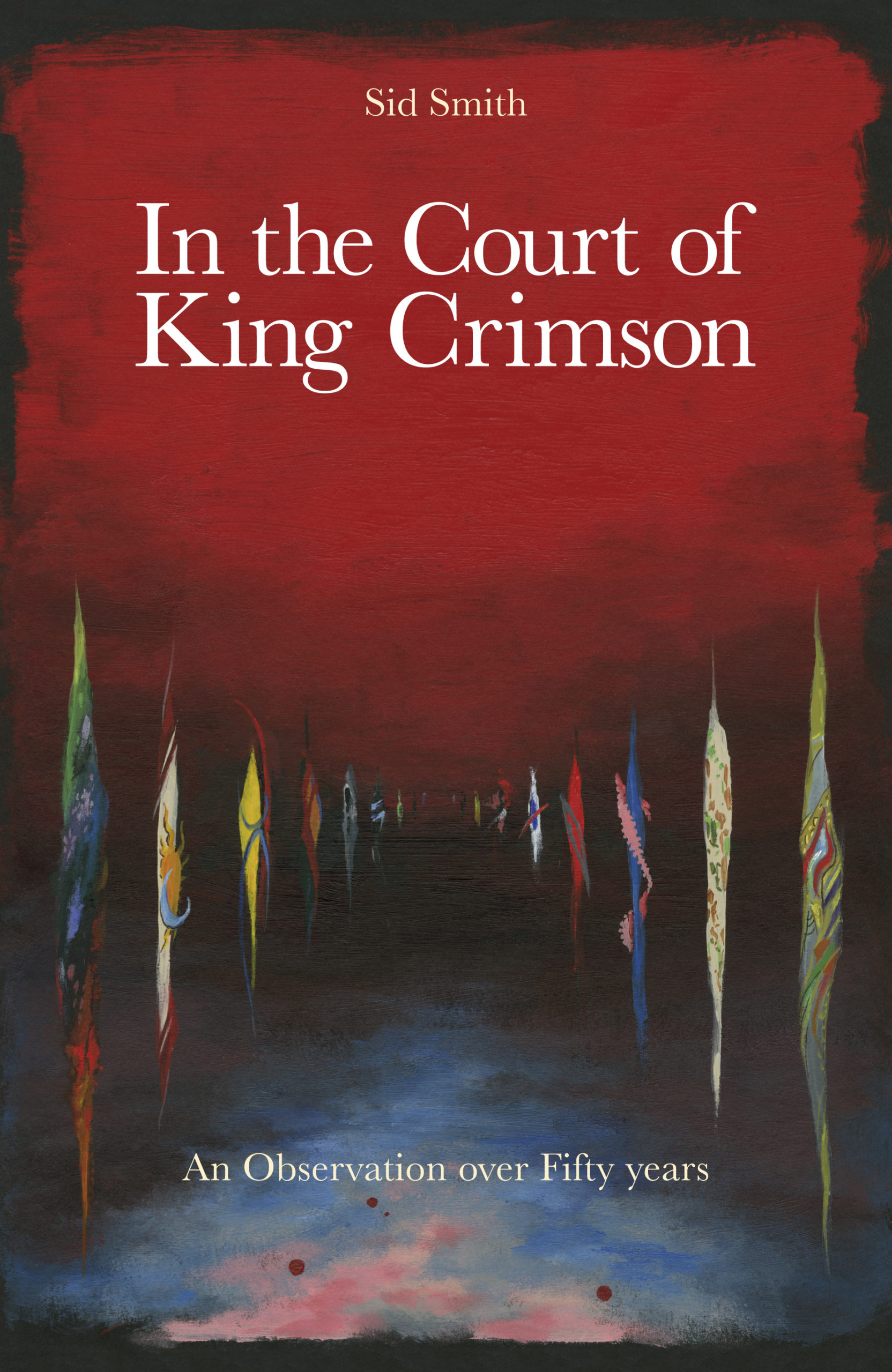
IN THE COURT OF KING CRIMSON by Sid Smith

This is quite simply one of the best books about music I’ve ever read. At 608 pages of fine print, it’s obviously exhaustive–but never exhausting. Consider the bare parameters of the task at hand: 50 years of the group’s existence; over 20 different members in various combinations; a notoriously prickly bandleader; one of the most sophisticated bodies of work in any musical genre. I can’t imagine anyone other than Sid Smith, longtime associate of the band and prolific rock journalist, who could have pulled it off.

The King Crimson story is unusual in that their peak of fame coincided with the release of their first album in 1969. Instead of the long slog through pubs full of flying beer bottles, ending up in stadium tours with mountains of cocaine, this is a story of constant struggle–often financial, but just as often aesthetic, as guitarist and final arbiter of all things Crimson, Robert Fripp, tries to embody his constantly shifting musical vision in the form of all too human players.

Smith perfectly balances the many aspects of the narrative. His in-depth interviews conjure the complex characters in telling detail, from Fripp’s mock-playful references to himself in third person, to Bill Bruford’s relentless desire to improve his craft, to Adrian Belew’s fragile egotism. Smith provides multiple viewpoints when there are arguments about who wrote what or whether somebody was fired or quit. For those (like me) who love the technical bits, there is gear and studio chatter and gig specifics. The music itself is expertly analyzed and critiqued. There’s even a bit of sex and drugs and alcohol. Plus the subtle, atmospheric cover painting by Mark Buckingham perfectly complements the contents.

The Crimson story per se ends on page 365, but addenda include capsule bios that take all the principals up through 2019, track-by-track notes on all the band’s albums, and a long section of gig diaries. (Not included, unfortunately, is an index.) Note that this is a vastly expanded version of a book that was originally published in 2001.

If you’re a fan of any of the incarnations of King Crimson, the book is essential. If you care about any of the bands that spun off from Crimson to become huge–Emerson, Lake & Palmer, Asia, Foreigner–or the musicians whose orbits intersected Crimson’s–Bowie, Eno, Yes, Talking Heads–you’ll find it fascinating at the very least.