Categories
Historical Fiction

AFFINITY by Sarah Waters

Selina is a young, beautiful medium with astonishing spiritual powers. Margaret is a woman on the verge of spinsterhood, nursing a broken heart. Millbank is a historical women’s prison in 1870s London where the two women meet and are drawn to each other. And both women have secrets they dare not reveal.

Waters’ second novel, from 1999, shows her already at her full powers, surpassing 1998’s brilliant but somewhat picaresque TIPPING THE VELVET and paving the way for her masterpiece, FINGERSMITH, in 2002. All three novels are set in the Victorian era, and all three are full of exquisite and surprising period detail–for example, the coconut husks from which the Millbank prisoners are forced to pluck coir fibers (used in mats and sacking) until their fingers bleed. Romantic passion of the forbidden sort figures prominently in all three, and they all feature flawed protagonists that Waters makes us care deeply for.

Another common element in the three books is Waters’ sympathy for the poor and the disadvantaged. In AFFINITY she draws clear parallels between the women inside and outside the Millbank walls: Selina is bound and gagged by the male spirit, Peter Quick, that she conjures. Margaret is a prisoner of her mother’s expectations. Married women are imprisoned by their husbands and single women by the rigid mores of society. Those who disobey end up in Millbank, or the graveyard. The last line of the novel reveals that the one character we thought had transcended those bonds is in fact in thrall to another.

Waters’ greatest literary debt is to Daphne Du Maurier, with whom she shares a magician’s skills of misdirection, an uncanny ability to evoke a past era, and a quiet but relentless belief in women’s empowerment. Her prose is understated and deeply rooted in her characters’ viewpoints, but nonetheless powerful:

“After the house was locked I kept my cloak about me, and stood a long time at my window, raising the sash a little to feel the thin rain of the new year. At three o’clock there were still boats ringing their bells, and men’s voices from the river, and boys running fast along the Walk; but for a single moment as I watched, the clamour and the bustle died, and then the morning was perfectly still. The rain was fine–too fine to spoil the surface of the Thames, it shone like glass, and where the lamps of the bridges and the water-stairs showed there were wriggling snakes of red and yellow light. The pavement gleamed quite blue–like china plates.”

If you haven’t experienced Waters’ work, you are missing out on some of the smartest, most enthralling, most affecting writing being done today. AFFINITY is a great place to begin correcting your oversight.
Categories
Contemporary Novels

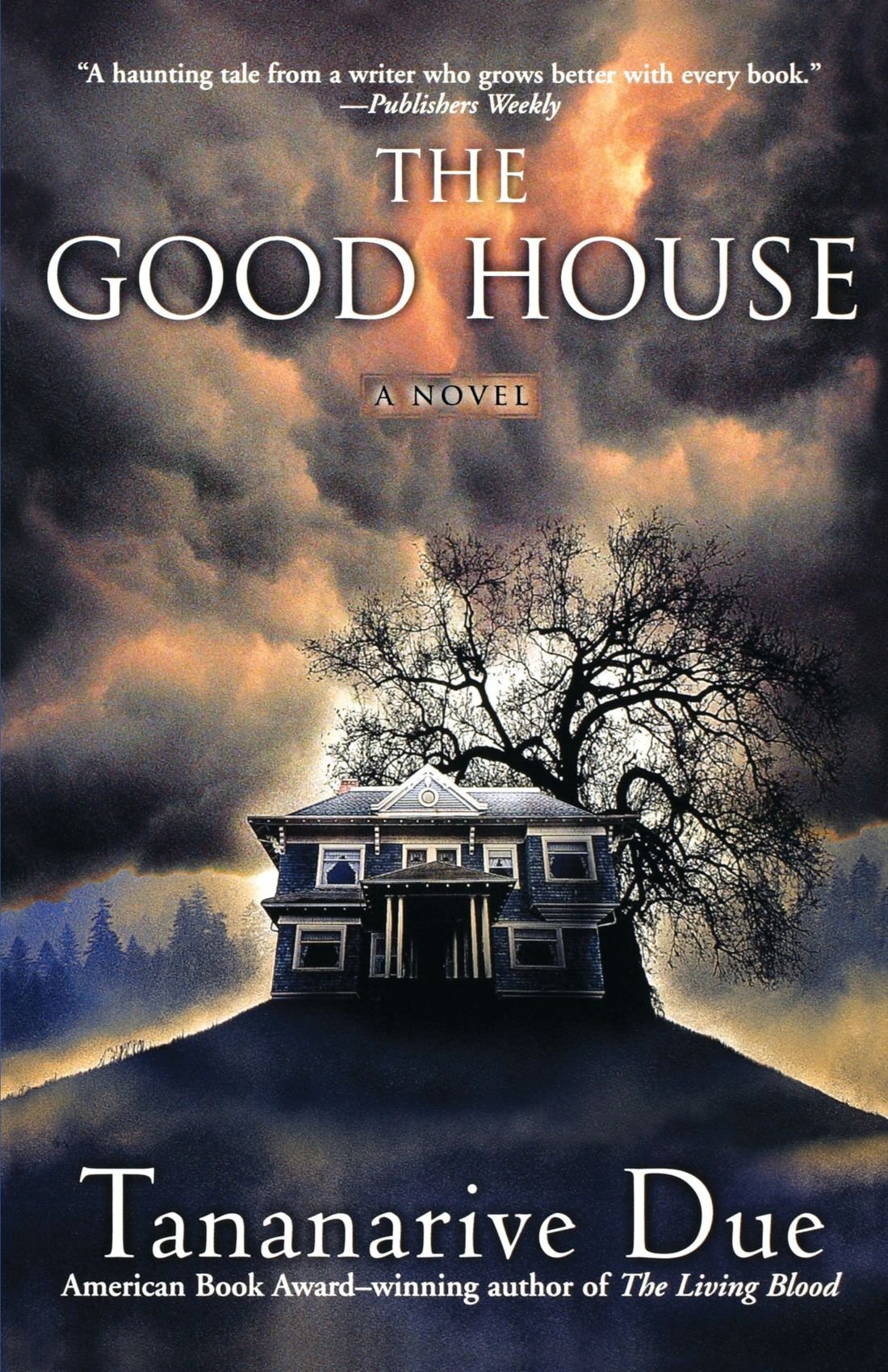
THE GOOD HOUSE by Tananarive Due

The less you know about this book going in, the more pleasure to be had from the frequent shocks to the system that it delivers. I will reveal as little as possible.

Angela Toussaint’s grandmother Marie was a manbo, a vodou priestess. Marie was revered by the citizens of rural Sacajawea, Washington, for her cures and potions, and at the same time she was never allowed to forget that she was the only African-American in town. She inherited a mansion on a hill, the ironically named Good House of the title, from her partner in the mail-order herbal business.

After the death of Angela’s mother, Marie raised Angela to be ignorant of vodou practices. Yet, years after Marie’s death, when Angela is spending the summer in the Good House with her teenaged son Corey, the supernatural begins to bleed into her reality anyway.

What a pleasure it is to read a book where the intricate plot feels so organic, so much the result of conscious decisions of complex human beings rather than a heavy authorial hand. Each choice creates ripples of consequences through the lives of a dozen or more richly drawn characters, across two parallel time lines. Angela is particularly sympathetic–strong but not superhuman, well intentioned but fallible, believably confounded when her notions of reality are taken away from her.

Subtleties abound. Corey and his best friend ride horses; vodou believers are considered “horses” when they are mounted by the lwa, the spirits. Though Due never belabors it, there are drastic differences between the way male characters use vodou and the way the female characters do, and that ties in to one of the many thematic concerns of the book–masculinity, toxic and otherwise, and the difficulty of raising a man-child in the 21st century. There are also issues of race in the novel, and a reminder that vodou, born in West Africa, nurtured in Haiti, is fundamentally Black magic. Due’s research is impeccable, but never overwhelming, and her moral compass never falters.

The combination of Due’s intensely visual writing and the empathy she creates for her characters results in some seriously scary scenes, and because of the aforementioned shocks to the system, I was left with no confidence that things were going to turn out even remotely okay.

As to whether they do or not, that’s for you to find out.

Categories
Contemporary Novels

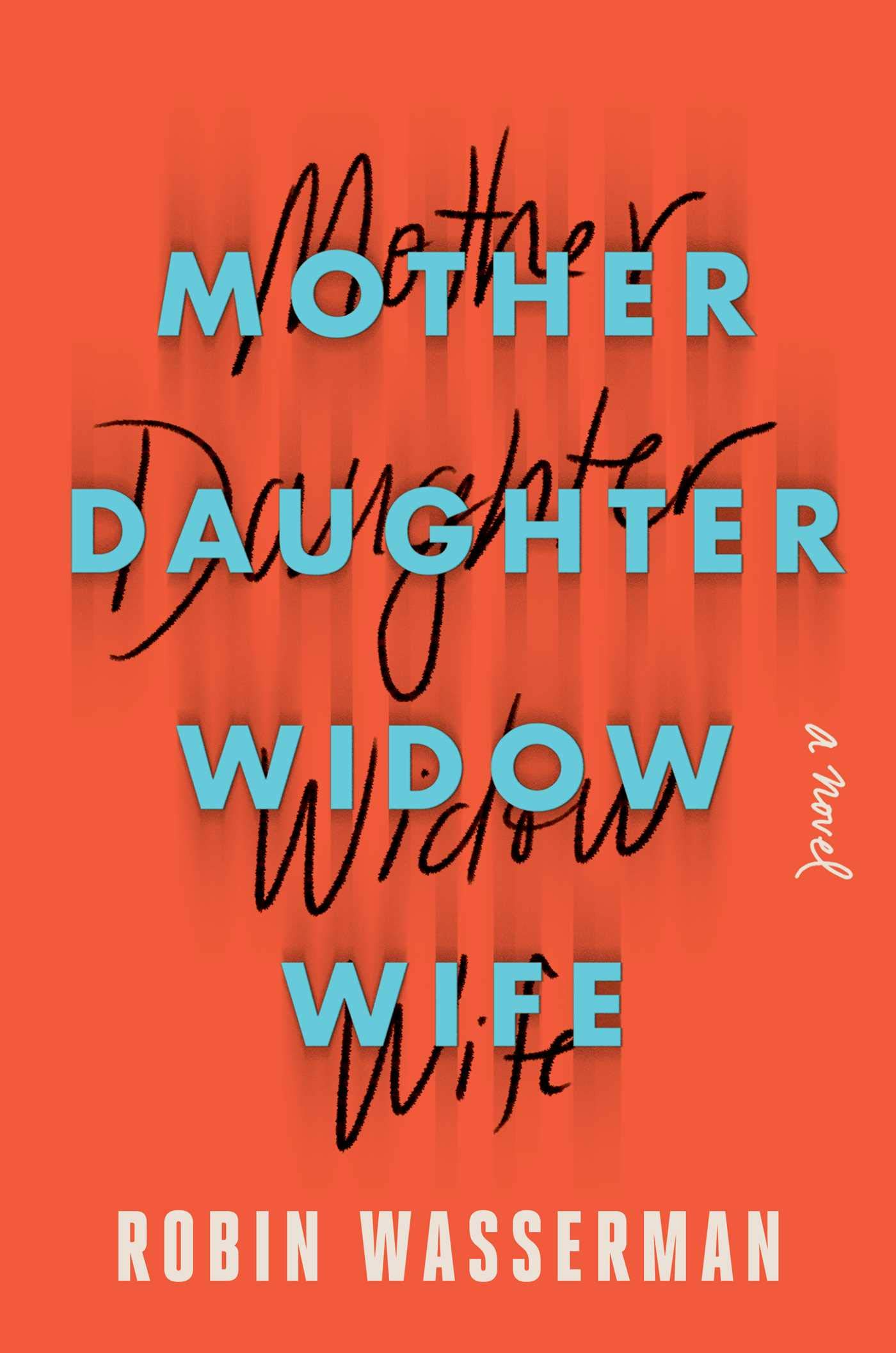
MOTHER DAUGHTER WIDOW WIFE by Robin Wasserman

Lew's Book Reviews: Cover of Mother, Daughter, Widow, WifeThis novel is not so much a hall of mirrors as a hall of echoes. As an auditory echo makes a space seem more vast, so literary echoes make this novel of carefully chosen specifics speak to larger issues of gender, identity, memory, and loss.

It begins with a mystery: Who is “Wendy Doe,” a patient suffering dissociative fugue, a kind of temporary amnesia that has not only deprived her of her memories, but also her personality? The time is the late 1990s, and she has ended up at the Meadowlark Institute for Memory Research, in the care of “cognitive psychology’s latest golden god,” Dr. Benjamin Strauss, who assigns newly hired researcher Lizzie Epstein to her case.

The narrative quickly expands to include four viewpoints: Wendy’s journal; Lizzie’s third-person POV in the nineties; the third-person narrative of Alice, Wendy’s daughter, in the 2010s; and the first-person voice of “Elizabeth,” who is Lizzie 18 years later. To Wasserman’s credit, as she darts back and forth between these perspectives, I was only disoriented in the early pages, as she intended me to be.

The viewpoint characters all have losses in common. Lizzie is still mourning her beloved father; when we meet her again as Elizabeth, she has just lost her husband. Alice loses her mother twice; Wendy has lost everything, and will herself be lost when her memory returns. Lizzie and Alice both abandon stalled relationships when they travel to Meadowlark; all three (four, counting Elizabeth) characters struggle to define themselves in ways that don’t also limit them–as the four categories of the title do. All the women long to be seen, in all their complexity.

Wendy’s fugue state is echoed by Benjamin’s love of Bach fugues, and by the structure of the novel itself, in which different voices pick up and play variations on themes of attachment and betrayal. This is just one example of the complexity of the novel, yet it never feels contrived or mechanical. Instead it feels rich, satisfying, lifelike. Wasserman’s intelligence and depth of scientific knowledge are reflected in her characters, especially Lizzie, whose acidic humor reminded me of Karen Joy Fowler: “The last time Lizzie came for a visit, her mother had been dating a therapist and wanted to talk about feelings. Specifically, she wanted to talk about Lizzie’s feeling like she had been abandoned by her mother, back when her mother abandoned her.”

For all its smarts and intricacy, the novel has moments of raw shock. There is an incident of rough sex, for example, that went far beyond my comfort level. I don’t believe Wasserman cares about my comfort, nor should she. Her responsibility is to her characters, and she sees them as they are.